 English
  العربية
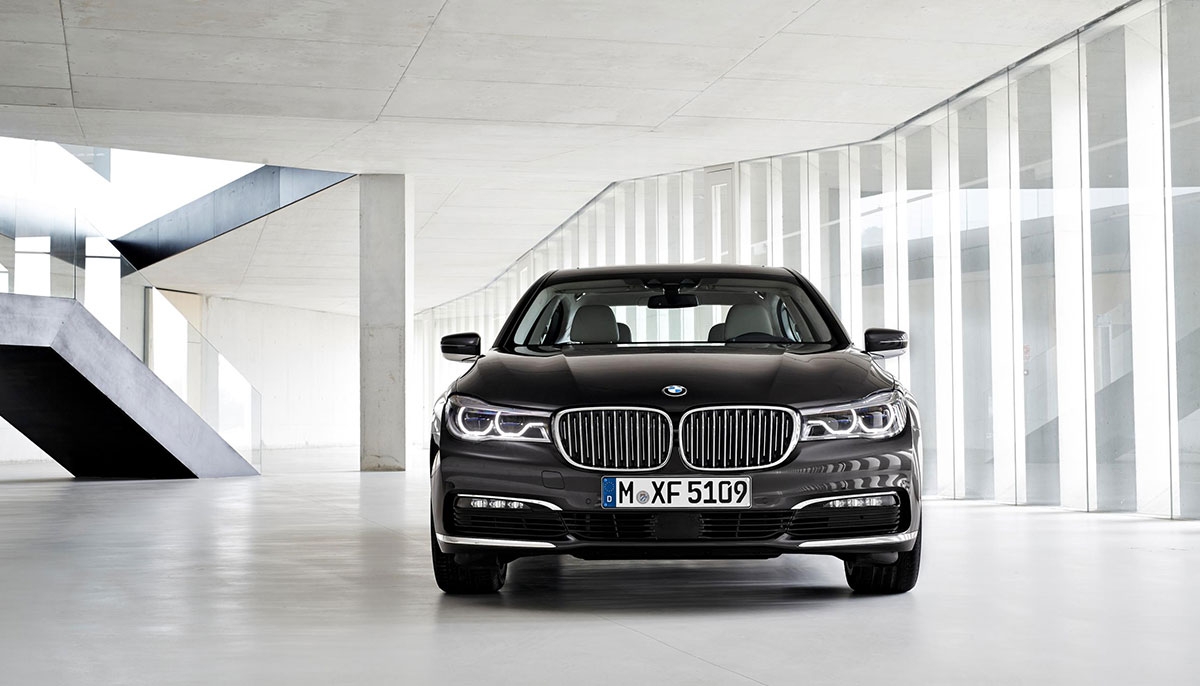
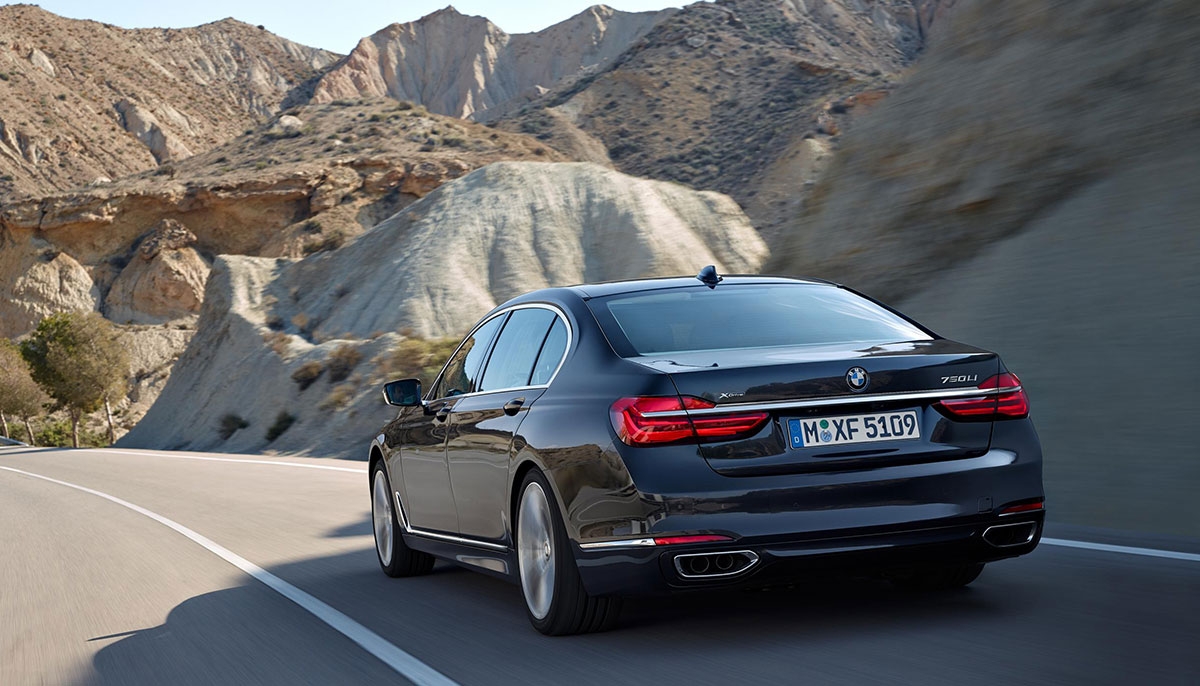
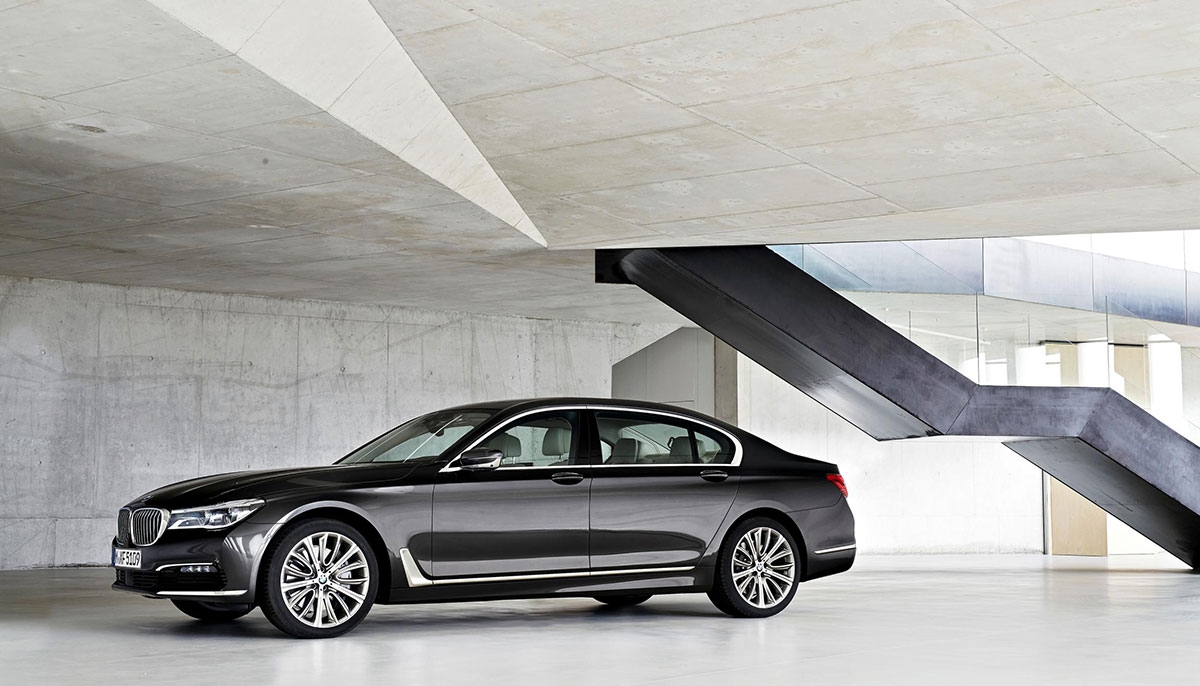
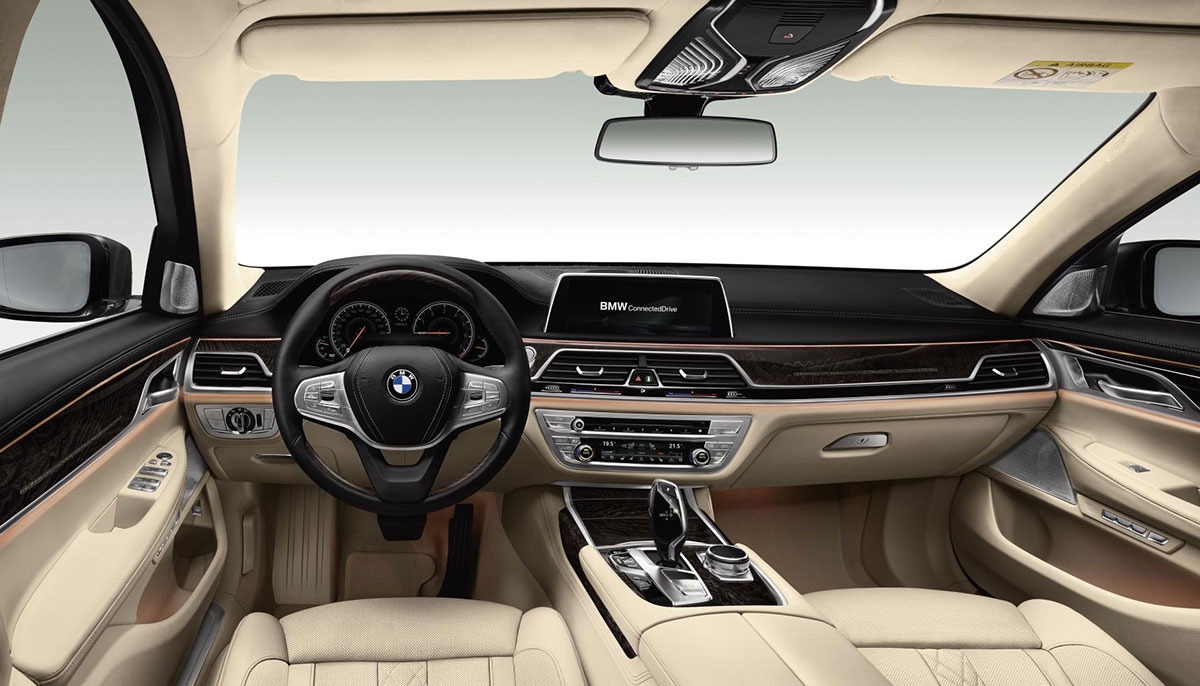
THE ALL-NEW BMW 7 SERIES
- Groundbreaking Carbon Core passenger cell
- World's first Gesture Control
- Active Kidney Grille and Air Breather
- Now offering the optional 7 inch Touch Command Tablet
- The All- New Display Key as a standalone option
- Offering standard Wireless Charging and WiFi Hotspot
- The new iDrive 5.0 with touch screen technology
- Panoramic Sky Lounge LED roof, Ambiance Lighting, LED Light Carpet
- Largest HUD in the industry
- Class leading performance and luxury
Today, BMW unveiled the all-new BMW 7 Series, the brand's flagship in its sixth generation. The 2016 BMW 7 Series sets a new benchmark in lightweight design, driving dynamics, comfort, intelligent connectivity and intuitive operation. The extensive use of carbon-fiber-reinforced plastic (CFRP) in the structure of the passenger cell and the strategic application of lightweight design reduce weight and increase both the overall torsion strength and bending stiffness of the passenger cell. The all-new BMW 7 Series will be introduced in the US as a 740i and a 750i xDrive model featuring BMWs newest and groundbreaking technologies such as Gesture Control, Wireless Charging and the standalone option of the Display Key. An Active Kidney Grille will also be available for the first time in the US. The all-new BMW 7 Series once again sets the standard for luxury performance, delivering the highest level of driving refinement in the premium class.
BMW's flagship vehicle reflects the company's dedication to pioneer with the development of groundbreaking technology while upholding the 7 Series precedent of comfort and driving dynamics. First introduced to the U.S. market in 1978, the new BMW 7 Series will be in its sixth generation. Many features and technologies developed by BMW, introduced in previous generations of the 7 Series, set the precedent for the future. Pace-Setting Technologies such as Antilock Braking System (ABS) first appeared in the 1978 model which also was the world's first production car to feature an electronic engine management computer (Digital Motor Electronics - DME). Illustrating segment leadership, an on-board computer (OBC) and Electronic Cruise Control set the standard for luxurious long-distance travel. The second generation, incorporated groundbreaking technologies such as Automatic Stability Control, adaptive transmission control, anti-tapping windows with express up and down on all four door windows and moonroof in addition to the world's first use of integrated body electronics with advanced diagnostic capabilities and Xenon Headlights (750iL). Technologies such as Dynamic Stability Control, Head Protection System and on-board Navigation System with moving map, CAN Bus technology for body electronics (5 integrated control units) and the revolutionary side-impact Interlocking Door Anchoring System defined the third generation. For the first time in the US the V8 featured VALVETRONIC variable valve lift technology. In its fourth generation, BMW introduced Active Roll Stabilization (ARS) on a sedan, MOST Bus technology for body electrical with 70+ control units on common busses and infinitely variable intake manifold. For the first time, the world also benefitted from adaptive brake lights and electromechanical parking brake and electronic adaptive headlights. BMW continued with the introduction of pace-setting technologies in its fifth generation 7 Series which hit the U.S. market in 2009. Night Vision 2 with Pedestrian Detection, Integral Active Steering, Adaptive Headlights with Dynamic Headlamp Control system with sensors measuring speed, steering angle and yaw as well as "reverse flow" cylinder heads to facilitate better packaging and minimize turbo lag defined this generation. The BMW core principle of safe transportation was assured with features such as Blind Spot Detection and Lane Departure Warning system. Active Cruise Control with frontal Collision Warning System, Dynamic Damping Control and Driving Dynamic Control assured the 7 Series reputation of safe and efficient long-distance comfort.
Design and equipment packages available from the launch of the all-new BMW 7 Series underline the car's extra sportiness and luxurious comfort. The exclusive appearance of the new BMW 7 Series is further enhanced by the Interior Design Package, an Alcantara headliner, deep-pile rear floor mats and fine wood inlays for the seat belt outlet covers, rear center armrest and roof grab handles in the rear.
The M Sport package enables customers to experience the dynamic driving properties of the new BMW 7 Series in greater depth. This package includes an M Aerodynamic kit comprising model-specific front/rear aprons and side skirts, plus 19 inch or 20 inch M light-alloy wheels, illuminated door sill plates bearing the M logo and accents in either light or dark chrome. M-specific details also underline the sporting character of the new BMW 7 Series in the interior. These include the BMW Individual headliner in Anthracite and the M driver's footrest.
The advances achieved with the latest generation of the BMW 7 Series succeed in resolving a number of traditionally conflicting paradigms: the car comes with an array of new innovations but weighs less, performance is more dynamic but fuel efficiency has been improved, and while it is more luxurious than ever, emissions are lower. Expanding knowledge, BMW i laid the foundation with groundbreaking BMW EfficientDynamics technology for the most diverse range of measures ever to have been implemented in a production BMW.
The complete package for enhancing driving pleasure and efficiency in the new BMW 7 Series comprises intelligent lightweight design with carbon-fiber-reinforced plastic (CFRP) as part of the BMW EfficientLightweight concept, a new TwinPower turbo inline 6-cylinder in the 740i engine from the BMW Group's new generation of modular engines, in combination with innovative new solutions for honing energy management and aerodynamic properties. The use of BMW eDrive technology in the BMW 740e xDrive plug-in hybrid model constitutes yet another highlight.
The new BMW 7 Series obtains an exemplary life-cycle thanks to resource-efficient material selection, new energy-efficient production processes and recycling. In order to achieve this, tangible sustainability targets spanning the vehicle's entire life cycle were defined in the early strategic phase of development and actively implemented throughout the development process.
The engine line-up available at the launch of the new BMW 7 Series range is spearheaded by the BMW 750i xDrive and its powerful V8 engine. This engine features a 4.4 liter displacement and BMW TwinPower Turbo technology with the turbochargers located within the V-shaped space between the banks of cylinders. This redesigned V8 engine now comes equipped with TwinScroll turbochargers featuring flow-separated, bank-specific exhaust manifolds made from thin-wall castings. Engine efficiency was increased with a change in the compression ratio from 10.0:1 to 10.5:1 and the latest generation of VALVETRONIC and Double-VANOS technology. The optimized engine cooling concept with separate flows through the cylinder heads and cylinder liners includes a map-controlled coolant pump. Throughput can be restricted to 10 percent to warm up the engine faster reducing energy consumption. For the first time in a production car the intake manifold has been partially integrated into the cylinder head allowing air-flow resistance to be decreased, maximizing air-flow volume while reducing the exterior packaging dimensions. Overall, the efficiency factor of the 445 hp engine has been greatly improved.
The inline 6-cylinder engine with BMW TwinPower Turbo technology fitted in the new BMW 740i comes from the BMW Group's latest generation of engines. The 3.0-liter gasoline unit of the BMW 740i produces an output of 320 hp. The new engine's crankcase, cylinder head and oil sump are all made from aluminum. The TwinScroll turbocharger features an indirect system of charge air cooling that is incorporated into the intake manifold and works in unison with High Precision Direct Injection, the very latest version of VALVETRONIC and Double-VANOS variable camshaft timing. Not only has the efficiency of the new inline 6-cylinder engine been increased, its response is even more spontaneous.